
There’s a certain point in the evolution of any market where the thing everyone fought to get access to stops being an advantage. That’s where MT5 is now.
A few years ago, launching a brokerage on MetaTrader 5 meant something. The platform was harder to obtain, integration was more complex, and having it up and running was a meaningful signal to clients and counterparties alike. That’s changed. Today, MT5 access is widely available through white label arrangements and packaged launch services, and the number of brokers and prop firms operating on it has grown substantially.
Getting the platform is no longer the challenge. What happens after that is.
The Misconception That’s Costing Firms
The assumption that getting MT5 live is the same as having a working brokerage is one of the most persistent problems in this space. It sounds obvious when stated directly, but it shows up constantly in how firms plan their launches and budget their buildouts.
What tends to follow an underprepared deployment is predictable: execution inconsistencies during active sessions, slippage that’s hard to diagnose, LP connectivity that degrades under volume, and a support team that’s reactive rather than equipped. The platform runs, technically, but the business isn’t performing the way it should. And by the time the problems are visible, client relationships are already affected.
The issue almost never turns out to be MT5 itself. It’s what wasn’t built around it.
What Actually Determines Execution Quality
Behind any MT5 environment, there are a few layers that have more direct impact on business outcomes than the platform license itself.
Liquidity is the obvious one, but it’s worth being specific. The question isn’t whether an LP is connected — it’s whether the liquidity arrangement is actually appropriate for the firm’s execution model. Thin or poorly matched liquidity shows up as wider effective spreads, increased rejects, and unreliable fills precisely when market conditions are most demanding.
Bridge configuration determines how orders actually move between the platform and liquidity venues, and this is where a surprising amount of operational control either exists or doesn’t. Firms that skip proper bridge setup often find they have limited visibility into order flow, no clean way to optimize routing as volumes grow, and a general inability to identify where execution problems are originating.
Hosting and server infrastructure tends to be treated as a commodity until something goes wrong. Latency, uptime, and network stability aren’t exciting topics, but they’re the foundation that everything else runs on. An unstable hosting environment will undermine a well configured bridge and a solid liquidity arrangement.
Ongoing maintenance is where a lot of firms genuinely underestimate the operational requirement. Infrastructure isn’t set and forget. LP relationships evolve, bridge parameters need adjustment, client volumes change the stress profile of the system. Treating the go live date as the finish line is how firms end up managing incidents instead of managing growth.
Why Prop Firms Tend to Feel This Earlier
Proprietary trading firms are a useful case study here because their business model is less forgiving of infrastructure gaps. When execution quality slips, it directly affects challenge integrity and trading outcomes in a way that’s harder to absorb than it might be for a traditional retail broker. There’s less buffer between infrastructure performance and business performance.
The firms that have navigated this well didn’t necessarily start with more sophisticated setups. They just recognized earlier that platform access was the entry point, not the solution, and planned their infrastructure accordingly.
How EBS FinTech Approaches the Problem
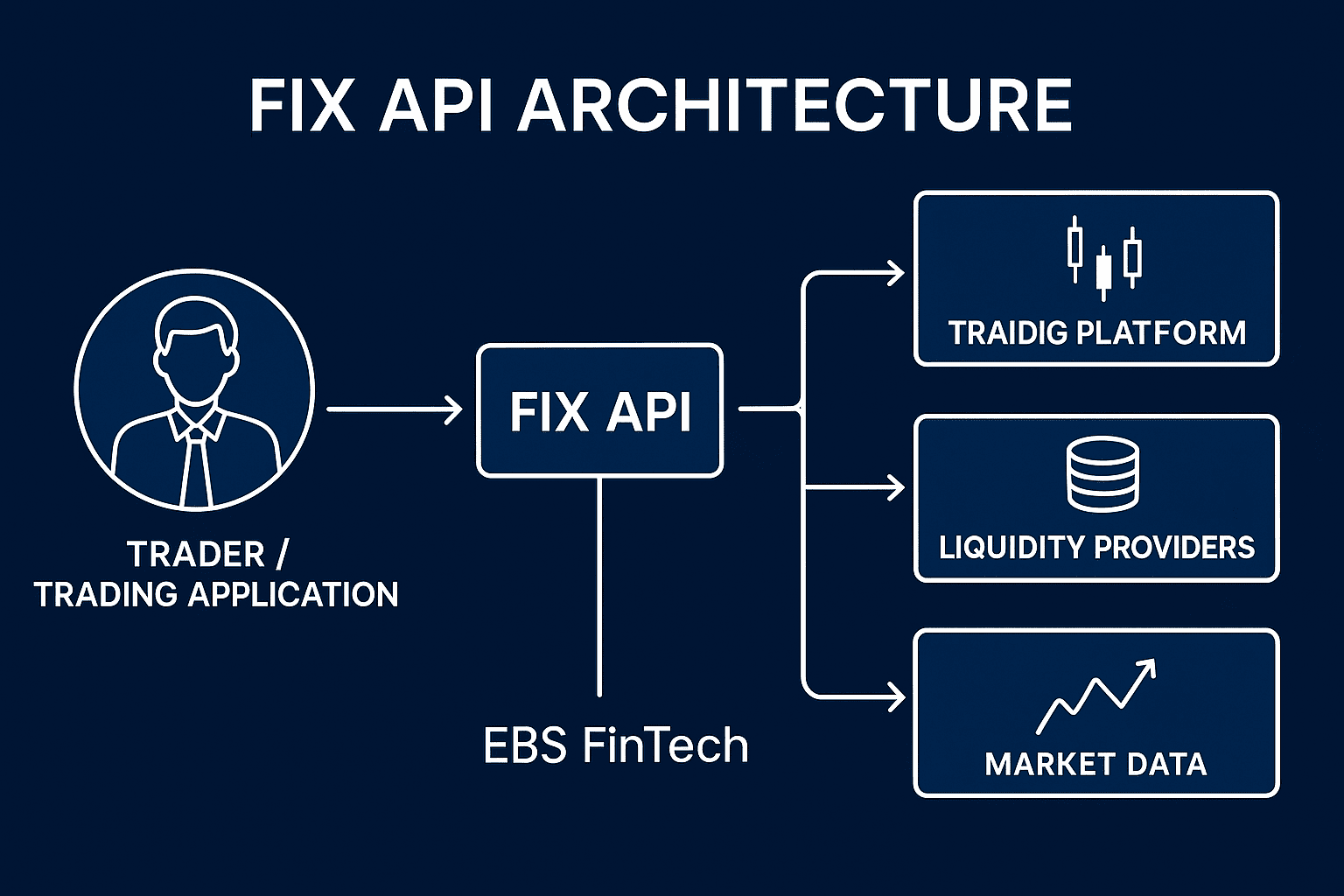
For firms that are thinking past the initial launch, a more resilient setup generally involves a few things: multi node deployment to improve redundancy and flexibility, multiple liquidity sources rather than dependence on a single provider, a bridge configuration that’s been built with routing visibility and optimization in mind, and a hosting environment that’s actively managed rather than provisioned once and left.
None of this requires extreme complexity on day one. It does require thinking about what the business actually needs to perform at the scale and quality level it’s targeting — and being honest about whether the current infrastructure supports that or just enables a launch.
Infrastructure is sometimes categorized as a cost. The more accurate framing is that it’s a direct input to revenue. Execution quality affects trader behavior. Trader behavior affects retention. Retention determines the actual economics of client acquisition. System reliability affects brand credibility over time.
The brokers and prop firms that are operating well right now aren’t differentiated by having MT5. They’re differentiated by what they built around it.
The platform enables a launch. Infrastructure determines whether the business behind it can actually grow.
If your firm is working through MT5 deployment, hosting, bridge setup, liquidity integration, or broader infrastructure planning, EBS FinTech works with brokers and prop trading operations across these areas. The goal is the same in every case: turn a platform deployment into something that holds up operationally as the business scales.