- What you are actually buying
- Banks, Prime of Prime and non bank providers
- Start with the counterparty, not the quote
- Coverage you will actually trade
- Spread is one line in the cost
- Depth, not top of book
- Fill rates and slippage
- Last Look
- Measure the whole path, not the ping
- Symbol specifications and sessions
- Technology fit
- One provider or several
- Credit, margin and minimums
- Support and reporting
- Plan the failure before it happens
- Test before you sign, and again before you go live
- A scorecard you can defend
- Red flags
- How EBS FinTech supports liquidity connectivity
Most LP selection starts as a spread comparison and ends there. Someone opens two demo feeds, watches EURUSD for an afternoon and picks the tighter one.
That number tells you very little about what your clients will pay. A quoted price is available in some size, for some period, subject to acceptance. What the brokerage actually pays is that price plus commission, markup, financing, slippage, the cost of rejected orders and the connectivity bill underneath all of it. Two providers that look identical on a quiet Wednesday behave very differently on payrolls day, at rollover, or on a Monday gap.
The useful question is not who quotes tightest. It is who can still price, fill and settle your flow when conditions are difficult, on terms your business can carry.
What you are actually buying
An LP relationship covers executable prices and depth, execution reports, market data, access to FX, metals, indices and other CFD markets, a margin or collateral account, statements, and a legal counterparty who owes you performance. Keep the price feed and the executable liquidity separate in your head. Displaying a market price and pushing client flow through at that price in your size are different capabilities. Before comparing anything, establish which prices are executable, in what size, and which legal entity stands behind the account.
Banks, Prime of Prime and non bank providers
Tier 1 banks supply much of the institutional FX market, but direct access is rarely realistic for a new retail broker. Expect a prime brokerage relationship, significant collateral, established volume and a full credit review. Bank grade liquidity in a sales deck does not mean your contract is with a bank.
Prime of Prime providers source or aggregate liquidity from banks, non bank market makers and other venues, then provide access on credit, margin and technical terms a mid sized broker can meet: several asset classes, lower onboarding thresholds, pre funded or margin accounts, and FIX, Gateway or Bridge connectivity. Quality varies enormously, and the label says nothing about where the prices originate or which entity you sign with.
Non bank liquidity providers run electronic market making businesses and can be strong in specific instruments or where bank depth is thin. They are not a second tier choice by definition. Judge them on the same criteria as anyone else: capital, regulation, execution model, transparency, and behaviour when the market moves.
Start with the counterparty, not the quote
A good feed is worth nothing if you cannot identify who you contracted with, or recover collateral when they fail. Establish the full legal name of the contracting entity, where it is incorporated, its regulator and licence number, and whether the permissions on that licence cover the service being sold to you. Then ask how your deposits and collateral are held, what the withdrawal and termination terms are, and which law governs the agreement.
Do not stop at the brand on the website. Groups routinely operate several entities, regulated and unregulated, and the one named in your agreement is not always the one in the marketing. Verify it in the regulator’s own register: the UK Financial Conduct Authority, for example, publishes firm status and permissions in the Financial Services Register. Regulation does not remove counterparty risk, but a supervisor, capital rules and a route to recourse are worth more than a tenth of a pip.
Coverage you will actually trade
Start from the instruments that will carry your volume, not the size of the catalogue, and check each for sessions, typical and stressed spreads, depth, contract size, margin, swaps and holiday handling. Two thousand instruments is not better than three hundred. Stable execution in your top thirty symbols is worth more than a long tail nobody trades. If single stock CFDs, index CFDs priced off futures, energy or other specialist products matter to your book, confirm them individually, because coverage claims tend to be generous.
Spread is one line in the cost
Quoted spread is easy to compare, which is why sales conversations stay there. The number worth comparing is:
Quoted spread + commission + markup + financing + slippage + rejects and requotes + connectivity = effective liquidity cost
In practice, each component should first be normalised into a common unit, such as cost per lot, basis points or cost per million in notional volume, rather than added together in its original form.
Bridge, Gateway and aggregator fees may arrive on a different invoice, but they are still part of what it costs to put an executable price in front of a client. Model the whole figure across a representative mix of symbols, sizes and sessions rather than a best case EURUSD quote from a two week demo. In the EU retail CFD context, execution quality is also assessed by considering the end price net of relevant costs rather than the headline quote, as ESMA explains in its Q&A on CFDs and other speculative products.
Depth, not top of book
Two providers can both show 0.1 pip at the top of book while one holds 100,000 EUR there and the other fills several million at or near the same level. The gap appears when you send size, or when your bridge nets several client orders into one request.
Test at volumes that reflect your own client base: one lot, five, ten, twenty five, fifty, and whatever you expect your largest normal order to be. Then run the test again during a release. A book that looks deep in quiet markets can thin out in seconds, and that thinner book is the one your clients will meet.
Fill rates and slippage
Fill rate is eligible order requests filled divided by eligible order requests sent. Agree what belongs in the denominator first, because cancelled orders, malformed requests and dropped sessions should not disappear into a favourable number. Break the result down by symbol, order size and session, then separately for news and rollover, keeping full fills, partial fills and rejects apart with reasons attached. A tight quote that rejects often can cost more than a wider quote that always fills, and it leaves you holding market risk while the order is rerouted.
Slippage needs the same treatment. A handful of tickets proves nothing, so look at thousands of observations: average positive and negative slippage, how often each occurs, how both change by symbol, size and volatility, and whether price improvement reaches you at all. Negative slippage in a fast market is normal. A pattern in which adverse moves reach you and favourable ones rarely do is not, and it will never appear in a spread comparison.
Last Look
Last Look gives the provider a final opportunity to accept or reject your request against its quoted price, typically to check that the price is still valid, that credit is available and that the request is operationally sound. Its presence is not evidence of poor execution. Its opacity is.
Ask which products and order types it applies to, the typical decision window, what causes a rejection, how price moves in each direction are treated, whether improvement is passed through, and what data you will get to verify any of it. Principle 17 of the FX Global Code asks participants using Last Look to be transparent about the practice and disclose it properly. The Code is voluntary guidance rather than regulation, but a provider who cannot answer against it is telling you something.
Measure the whole path, not the ping
A low ping between your VPS and an LP endpoint tells you the round trip time on one network segment. It does not tell you how long a client order takes end to end, because the real path is longer:
MT5 server → Gateway or Bridge → aggregator → LP → execution response → MT5 confirmation
Measure each hop where you can, and read the median alongside the 95th and 99th percentile, because averages hide the intermittent delays clients complain about. Check recovery too: how quickly a session resumes after a disconnect matters more than a few milliseconds saved in normal conditions. Location is part of this, since MT5, the bridge and the LP endpoint spread across poorly connected regions add latency no tuning will remove.
Symbol specifications and sessions
Liquidity integrations usually fail for a boring reason. The same instrument is configured differently on the LP side, in the connectivity layer and in MT5. For every symbol, reconcile:
- LP symbol and MT5 symbol
- Contract size, digits and tick size
- Minimum and maximum volume, and volume step
- Quoting and trading sessions, plus holiday schedules
- Margin calculation, swap method and values
- Stop and freeze levels, and any close only state
This is not a naming exercise. A wrong contract size, calculation mode or price multiplier produces wrong margin, wrong exposure and wrong client P&L, and it surfaces during a busy session. Our guide to MT5 group configuration, leverage and margin covers the platform side of the same problem. If the provider offers extended or weekend sessions, confirm the liquidity is genuinely executable, where it comes from, and how emergency widening or close only status reaches you.
Technology fit
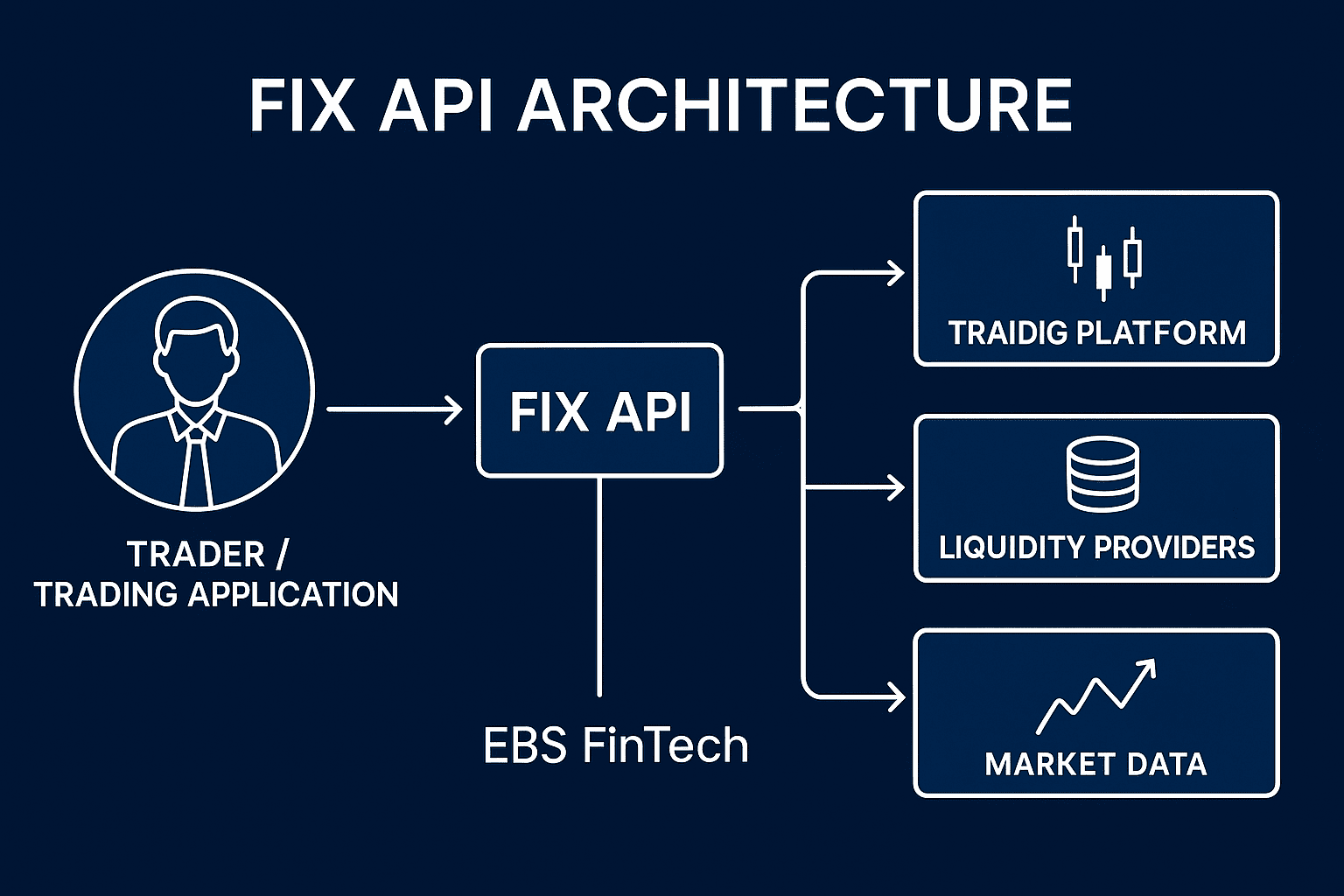
A FIX API, a native MT5 Gateway, a third party bridge, an aggregator and a REST or WebSocket data feed are different layers, not competing products. FIX is a messaging standard, a Gateway connects to the platform, and a bridge or aggregator adds routing, exposure handling, symbol normalisation and multi LP logic. For the practical difference, see FIX API vs MT5 Gateway.
Confirm before signing that the proposed interface supports the order types, market data, execution reports, session recovery and account model you need. FIX is an open standard maintained by the FIX Trading Community, but using the same FIX standard does not make two systems automatically compatible. The parties still need to align protocol versions, message fields, session rules, symbol identifiers and business logic. Our FIX API best practices guide covers the session and mapping discipline that takes.
One provider or several
A new broker does not need five LPs on day one. One reliable provider is cheaper, easier to reconcile and monitor, and much faster to troubleshoot, with fewer mapping and routing errors available to make.
To decide when to add a second liquidity provider, weigh the expected execution benefits against collateral requirements and the cost of managing another LP.
Add providers when you have a reason you can state: more depth, products the first one cannot price, an alternative source of prices, or real control over routing. Every addition brings another account, contract, session, symbol set, reject code list and reconciliation file, so aggregation should solve a defined problem rather than make the architecture sound institutional. Liquidity aggregation across multiple providers sets out how the routing works in practice.
Credit, margin and minimums
Commercial terms often matter more than a fraction of a pip. Ask about the initial deposit, collateral, margin rates by asset class, intraday versus overnight margin, whether the account is pre funded or credit based, margin call and liquidation rules, treatment of net and gross exposure, and withdrawal timing. Then ask about the charges that never appear in the spread: monthly minimum commission, minimum volume and ticket size, inactivity fees, platform, connectivity and market data fees, and onboarding or termination costs. Cost it yourself across conservative, expected and growth cases, because a model built for a high volume broker can be punishing for a new operation.
Expect due diligence in the other direction too. The provider will assess your licence, ownership, AML framework and client onboarding before approving an account, so the compliance work completed before going live affects which providers will deal with you at all.
Support and reporting
Incidents do not wait for office hours, so test the support process before going live rather than reading the service description. Confirm coverage hours, emergency channels, whether you can reach a dealing desk, escalation levels, weekend cover, and who owns a problem when several vendors are involved. When a FIX session drops on a Friday afternoon, reaching someone competent within five minutes is worth more than the fraction of a pip you negotiated.
The provider also has to give you enough data to judge it: orders and fills, partial fills, rejects with reasons, requested versus executed prices, slippage in both directions, execution timestamps, volumes, commissions, swaps and daily statements. Without that, you cannot separate an LP problem from a bridge, server, mapping or client side problem, and every incident becomes an argument.
Plan the failure before it happens
Even with one provider, decide in advance what happens when that connection is gone: a second executable LP, an alternative Gateway or FIX route, controlled rerouting, close only mode, suspending affected symbols, and a manual procedure for exposure and client communication.
A backup price feed is not backup execution. If clients can keep opening positions while you cannot hedge, the backup has made your risk worse. How that exposure is handled depends on your book, which is a question of A book, B book and hybrid risk management rather than connectivity alone. The liquidity path belongs in the same continuity plan as the platform and the servers, and MT5 disaster recovery best practices covers how those dependencies are tested together.
Test before you sign, and again before you go live
A demo connection proves the configuration works. It does not prove live execution behaves the same way. Run UAT on the architecture you intend to use in production and, where possible, a live account with controlled exposure.
Differences between providers show up under stress, so schedule testing around major releases such as payrolls and CPI, central bank decisions, the Monday open, daily rollover and public holidays. Record how spreads, depth, rejects, execution time and trading status change, and whether anyone told you at the time. Wider spreads under genuine market stress do not by themselves indicate a problem with the provider. What warrants investigation is a spread that moves independently of the underlying market, or a status change you learn about from client complaints.
Then work through the mechanics on that same architecture:
- Spreads and depth across sessions and at several order sizes
- Full fills, partial fills and reject reasons
- Slippage in both directions, including on large orders
- Symbol and contract mapping, margin, swaps, trading hours and holidays
- Session logon, reconnection and FIX sequence recovery
- A simulated connection interruption in a controlled test environment or an approved drill window, then your backup route or close only procedure
- Statements and reconciliation against your own records
Record it all in one format so providers can be compared on the same basis.
A scorecard you can defend
Adjust the weights for your products, client base and execution model.
| Category | Weight | What to assess |
|---|---|---|
| Regulation and counterparty | 20% | Contracting entity, permissions, financial strength, collateral, jurisdiction |
| Execution quality | 20% | Fill rate, rejects, slippage, Last Look, consistency |
| Pricing | 15% | Spread, commission, swaps, markup, effective cost |
| Liquidity depth | 15% | Executable volume by symbol, size and market condition |
| Technology | 10% | FIX, Gateway and bridge compatibility, monitoring, recovery |
| Support | 10% | Coverage, escalation, incident response, SLA |
| Product coverage | 5% | Core instruments, sessions, contract specifications |
| Commercial terms | 5% | Deposit, margin, minimums, fees, exit rights |
Score from contracts, regulatory records, execution data and your own testing, not from a presentation. Some criteria are pass or fail: an unclear contracting entity, an unacceptable counterparty structure or an incompatible interface cannot be offset by a strong pricing score.
Red flags
Slow down if a provider will not name the contracting entity, markets a regulated group company but contracts through another one, avoids total cost, will not disclose commissions, swaps or minimums, produces no meaningful execution reports, cannot explain its Last Look or reject policy, shows a large unexplained gap between demo and live, has no escalation process, keeps termination terms vague, demands a long lock in, or promises zero spread, zero slippage or guaranteed fills.
No provider delivers the best price, unlimited depth and guaranteed execution in every condition. The closer a claim gets to that, the more contract language and live data you should ask for.
How EBS FinTech supports liquidity connectivity
The right provider is rarely the one that wins a spread comparison. It is the one that still works when order sizes grow, markets move and something breaks. That judgement covers counterparty strength, effective cost, executable depth, fill quality, technology, credit terms and support together, evidenced by regulatory checks, contract review, execution data and controlled testing rather than a demo screenshot. It is the standard that matters after the brokerage goes live, not during the sales process.
EBS FinTech is a brokerage technology and infrastructure provider. We are not a liquidity principal, a broker dealer or a custodian. Our work is the implementation side of that decision: assessing candidate providers technically and operationally, coordinating with your shortlist, MT5 Gateway and FIX connectivity, third party bridge and aggregator integration, symbol and contract specification mapping, markup and routing configuration, demo, UAT and live testing, primary and backup path design, server hosting and connection monitoring, and incident triage and vendor coordination under the agreed support scope.
Liquidity accounts, pricing, execution and contractual obligations remain matters between you and the provider you select. Our role covers the technical integration, configuration, testing and operational support included in the agreed project scope. More detail on our liquidity, connectivity and aggregation services.
Disclaimer: This article is for general information only and does not constitute legal, regulatory, financial or investment advice. Liquidity provider approval, account terms, pricing and execution are determined by the relevant third party providers. Brokers should obtain independent professional advice and conduct their own legal, regulatory, credit and technical due diligence.