- What Changes When You Add an LP?
- Compare Depth and Execution Quality
- A Backup Must Be Able to Execute
- Counterparty Diversification Has a Funding Cost
- Give Each Provider a Defined Role
- Does Multi LP Require a Separate Bridge?
- When Is a Second LP Worth Adding?
- Five Questions Before Approving the Change
- Move From One LP to Several in Stages
- How EBS FinTech Supports LP Connectivity
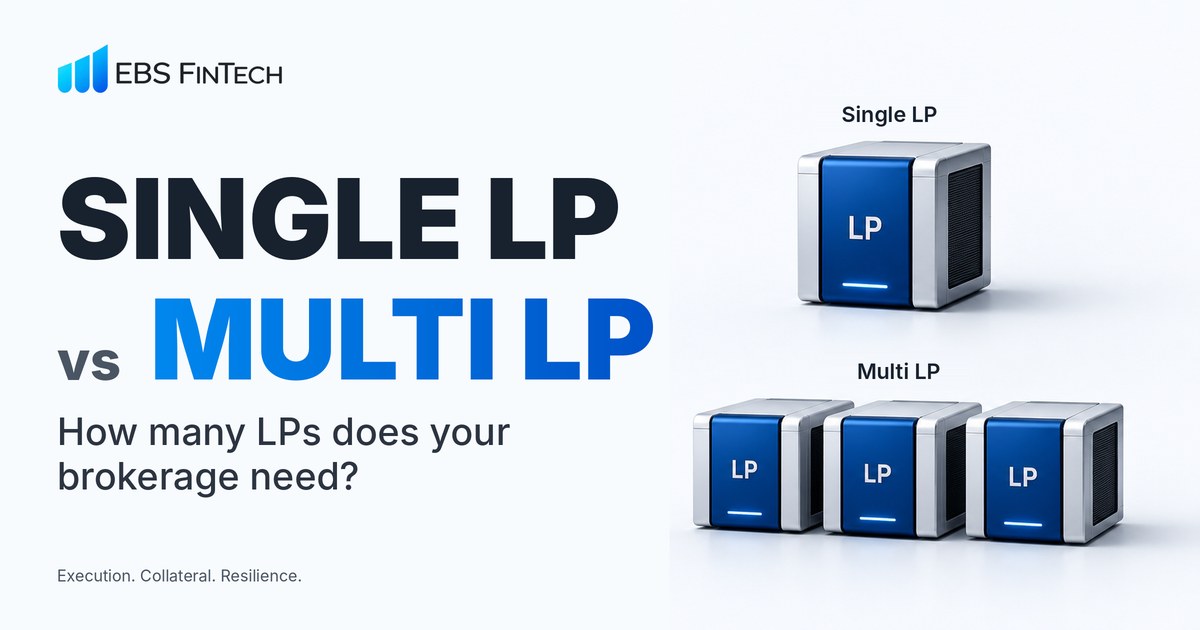
A broker with a focused product range and manageable hedge requirements can operate with one liquidity provider. Another becomes useful when it solves a specific problem: insufficient depth, inconsistent execution, missing products or excessive dependence on one counterparty.
The single LP vs multi LP decision also depends on funding and operational capacity. Keep one provider while it meets the business’s requirements on workable terms. Add another when the benefit justifies the capital, technology and daily work involved.
What Changes When You Add an LP?
A typical path with one LP is MT5 → compatible Gateway or Bridge → LP. Fewer interfaces and accounts simplify integration, reconciliation and troubleshooting.
An LP that aggregates several banks or venues provides access to multiple upstream sources. Under a single contractual relationship, the broker still depends on the counterparty holding its collateral.
A setup with several LPs uses a Bridge, aggregation engine or a solution native to the platform to connect the providers. The design determines whether they compete within a price pool, cover different products or provide a funded backup. Assess the independence of each execution path by checking shared intermediaries, credit arrangements and infrastructure.
For a new broker, splitting limited hedge volume can make commercial minimums harder to meet. Managing one LP leaves the team fewer accounts and interfaces to oversee while it establishes reliable platform operations and reporting.
Compare Depth and Execution Quality
Imagine LP A quotes EURUSD tightly for small orders, but depth weakens above EUR 5 million. LP B starts slightly wider but handles that size more consistently. The figures in this example are hypothetical. Compare the achievable average price for the whole order, supported by actual fills.
Analyse execution by instrument, order size and session, keeping news and rollover observations separate. Include failed attempts; favourable slippage statistics can conceal frequent rejections. Record both positive and negative slippage against a defined price and timestamp.
Ask which streams use last look and how requests are assessed. The GFXC’s guidance emphasises fair, predictable handling and disclosure. Its FX Global Code is voluntary good practice guidance for the wholesale market.
Providers may share upstream liquidity, so displayed depths cannot always be treated as independently executable. Our LP selection guide covers the broader assessment.
Track trading session connectivity and execution availability, stale quotes, full and partial fills, rejects, slippage, depth, free margin and recovery time. Measure response latency beyond the average, including the 95th and 99th percentiles (p95/p99). Use consistent definitions and comparable flow; compare large tickets during news with similar flow, and small orders in quiet markets with their equivalents.
A Backup Must Be Able to Execute
When the only usable LP route fails, external hedging through it becomes unavailable even if MT5 continues running. A second price feed alone does not restore hedging; the backup has to accept and fill orders.
A backup needs an approved account, sufficient margin or credit, compatible products and tested routing. Validate symbol mapping, contract sizes, sessions, quote freshness, exposure limits and switching conditions. Test FIX or other session recovery, partial fills and delayed reports.
An unanswered order may already have executed. Resending it blindly to another LP can create a duplicate hedge; recovery must establish its state through supported status checks and reconciliation.
Check shared dependencies too. Two LPs behind one failed connector can both become unreachable. Define who restricts affected trading, handles unresolved exposure and authorises a return to the primary route.
Counterparty Diversification Has a Funding Cost
Multiple relationships can reduce concentration, provided funds and exposures are actually distributed. Check legal entities, group links and credit structures: several execution sources can still depend on one credit counterparty.
Consider USD 300,000 of the broker’s own available funds, used only as an illustration. With one LP, the entire amount supports one account. Split equally across three separate LP accounts, each has USD 100,000 against its own margin requirements.
Idle funds at LP B do not cover a margin shortfall at LP A until they are transferred, and transfers take time. Margin is generally not offset between accounts held separately with different LPs. Sharing collateral across several liquidity sources is generally arranged through a single prime broker or prime of prime provider, within its approved credit and margin framework. Aggregation software does not itself pool collateral or change these margin arrangements.
Compare minimum deposits, commission floors, volume commitments, connectivity and data fees, and financing. Account for the capital tied up in deposits and its funding cost. Check whether minimum commissions are credited against trading charges or billed separately. Model periods of low volume as well as expected growth.
Convert trading charges into a common unit, such as cost per USD million of notional, and list fixed fees separately. This makes it easier to see whether better execution offsets the recurring cost of adding an LP.
Give Each Provider a Defined Role
One arrangement is to assign FX to one LP and metals to another. Plan backup coverage for each product separately: a connection that only carries metals cannot replace an unavailable FX route.
Depending on system capabilities, routing can use eligible prices, order size, instruments, client groups, exposure limits or weighted allocations. Assess round robin allocation against actual execution results. Rules should be documented and consistent with the broker’s execution policy.
Aggregation requires instrument normalisation, quote validation, price book and depth handling, markups and order state management. Receiving several feeds is only the beginning. See Liquidity Aggregation: How Brokers Combine Multiple LPs for the mechanics.
Does Multi LP Require a Separate Bridge?
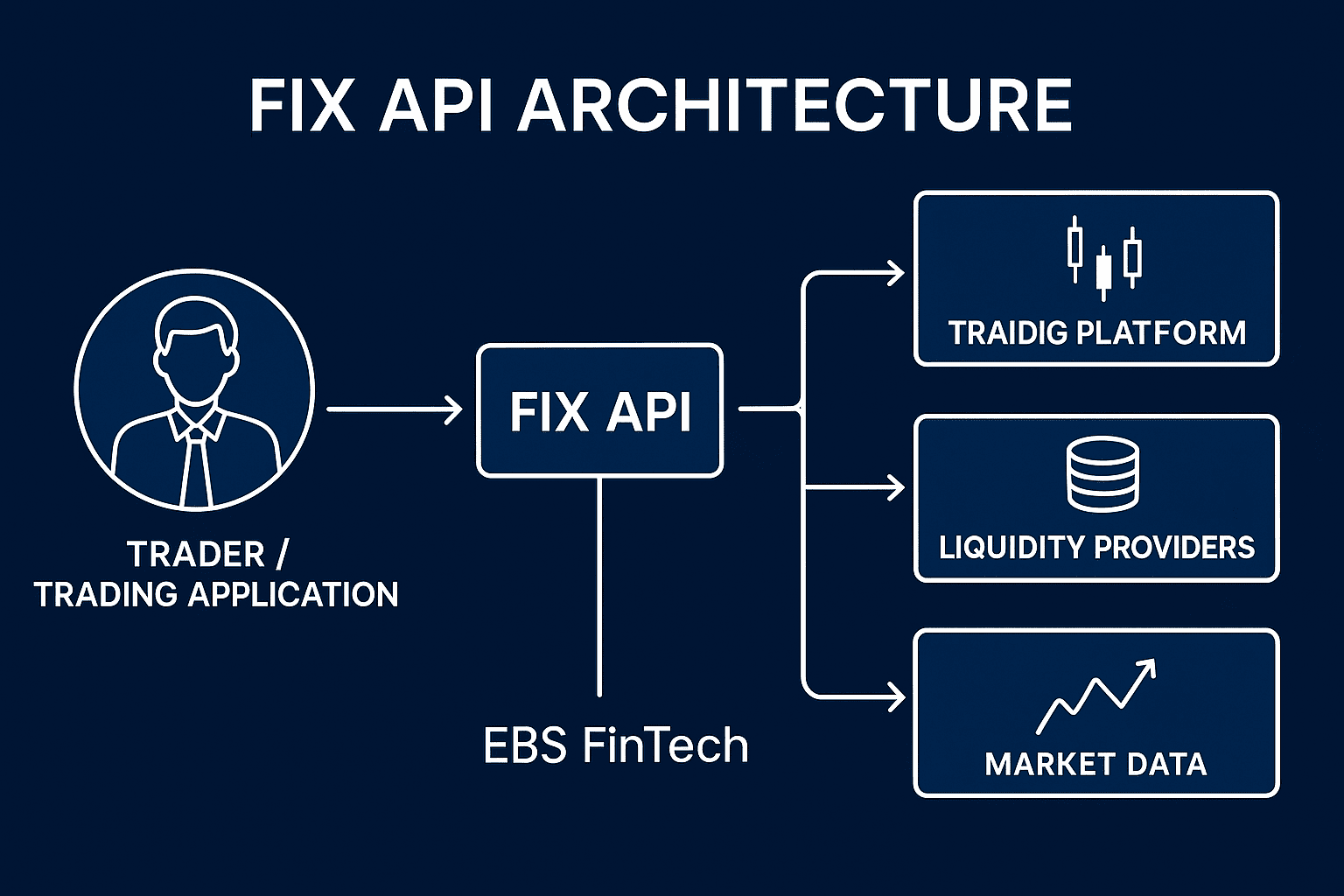
The answer depends on the platform and available components. A Gateway connects MT5 to another system; FIX is a messaging standard. Pricing and routing functions depend on the chosen Bridge or aggregation engine. MetaQuotes also offers Ultency, a native MT5 aggregation, matching and risk management solution. Confirm deployment capabilities and commercial terms.
Our FIX API vs MT5 Gateway guide explains these layers. The broker separately chooses its A-Book, B-Book or Hybrid model. Plan capacity around actual external hedge demand, including stressed demand. Internalisation and netting affect how much client turnover reaches an LP.
When Is a Second LP Worth Adding?
Assess the need for another provider when outages, larger tickets, persistent execution problems, product expansion or concentration limits create a material need. New regions or trading sessions matter when they expose a measurable gap.
First identify the cause. If the problem is a configuration or network fault, fixing the existing connection may be enough. Once the cause is clear, set an acceptance test: representative large orders for depth, funded failover tests for resilience, or a defined redistribution of funds for concentration.
| Model | Typical use | Typical complexity | Redundancy and funding |
|---|---|---|---|
| Single LP | Focused products, manageable demand | Lower | Concentrated funds; no independent second LP by default |
| Two LPs | Defined backup, capacity or product need | Moderate | Useful backup requires tested coverage and funding |
| Three or more | Several distinct needs and sufficient staff | Higher | More routes, with collateral spread across separate accounts |
Choose according to operational requirements; LP count alone says little about a broker’s size or maturity. More providers also mean more reconciliation, limits and incidents. Splitting flow too thinly can undermine commercial terms.
Five Questions Before Approving the Change
- What are our external hedge volume, typical ticket sizes and peak requirements?
- Which products or sessions need improvement, and which require backup coverage?
- Can we fund each account through stressed conditions and transfer delays?
- What execution interruption can we tolerate, and what happens during it?
- Who owns routing, funding, reconciliation and incident response?
The right number of LPs is the number the broker can fund, monitor and manage while maintaining reliable execution. Every additional LP should have a clear purpose and a measurable result.
Move From One LP to Several in Stages
Start by documenting LP1’s mappings, limits, reconciliation and execution baseline. Check whether the existing Gateway, native engine or third party system supports the intended expansion before purchasing more components.
Next, onboard and fund LP2 and verify technical behaviour. Use demo testing to validate integration and a small volume of controlled live orders to assess liquidity quality. Test failure scenarios and retain configuration backups and rollback conditions.
Agree escalation contacts and operating hours with both providers before switching flow. The team should know who investigates an unresolved fill, which records to supply and how funding is arranged if the backup must carry more business than usual.
Adjust allocations only after orders, positions and balances reconcile reliably. The aim is to change liquidity relationships without rebuilding the trading environment, while still completing each provider’s onboarding and acceptance tests.
How EBS FinTech Supports LP Connectivity
EBS FinTech assists with MT4/MT5 server configuration, LP connectivity, symbol and contract mapping, supported Gateway/FIX connections, and integration with the Bridge or aggregator the client selects. The project scope defines the testing, integration monitoring, troubleshooting and launch support required.
EBS FinTech does not supply Bridge products or provide Bridge hosting, operation or maintenance. The broker obtains required third party licences and services from its chosen provider; native aggregation is assessed under the relevant platform arrangement.
LP contracts, collateral and dealing decisions remain with the broker and its providers. Our Liquidity, Connectivity & Aggregation service helps define the technical scope and tests for the proposed setup.
This article provides general technical and operational information. Examples are illustrative; functionality and terms depend on the relevant providers and agreements. MetaTrader 4 and MetaTrader 5 are trademarks of MetaQuotes.